
LICENSED WILDLIFE CATCHERS
SNAKE REMOVAL
MACKAY
Professional Snake Catching & Relocation
Professional Snake Removal & Relocation in Mackay
Need a reliable snake catcher in Mackay? Mackay Snake Catchers provides professional snake removal and relocation services for homes, businesses and rural properties throughout Mackay and surrounding areas.
Snakes can turn up in unexpected places, including roof spaces, ceilings, sheds, air-conditioning units, gardens, vehicles and even bathrooms.
Whether you’ve spotted a highly venomous Eastern Brown Snake or a non-venomous Carpet Python, our experienced snake catchers can safely capture and relocate snakes while prioritising the safety of your family, pets and property.
Never attempt to catch or handle a snake yourself. Contact Mackay Snake Catchers for prompt, professional assistance.
Where do snakes hide around Mackay homes?
We’ve removed snakes from some surprising places around Mackay, including roof spaces and ceilings, air-conditioning units, sheds, carports, toilet bowls, shower drains and even vehicles.
If there is one snake could there be more?
Yes, it is possible in breeding season.
Does the same snake return each year?
No.
How do I keep snake away from my property?
Keep yards tidy and lawns short, remove any rubbish/items laying around the sheds and chook pens.
Common Snakes in the Mackay Region
Mackay is home to a variety of venomous and non-venomous snakes. From Carpet Pythons and Common Tree Snakes to highly venomous Eastern Browns, our experienced snake catchers regularly encounter these species throughout the region. Learn more about the snakes commonly found around Mackay, including their appearance, behaviour and whether they are dangerous.
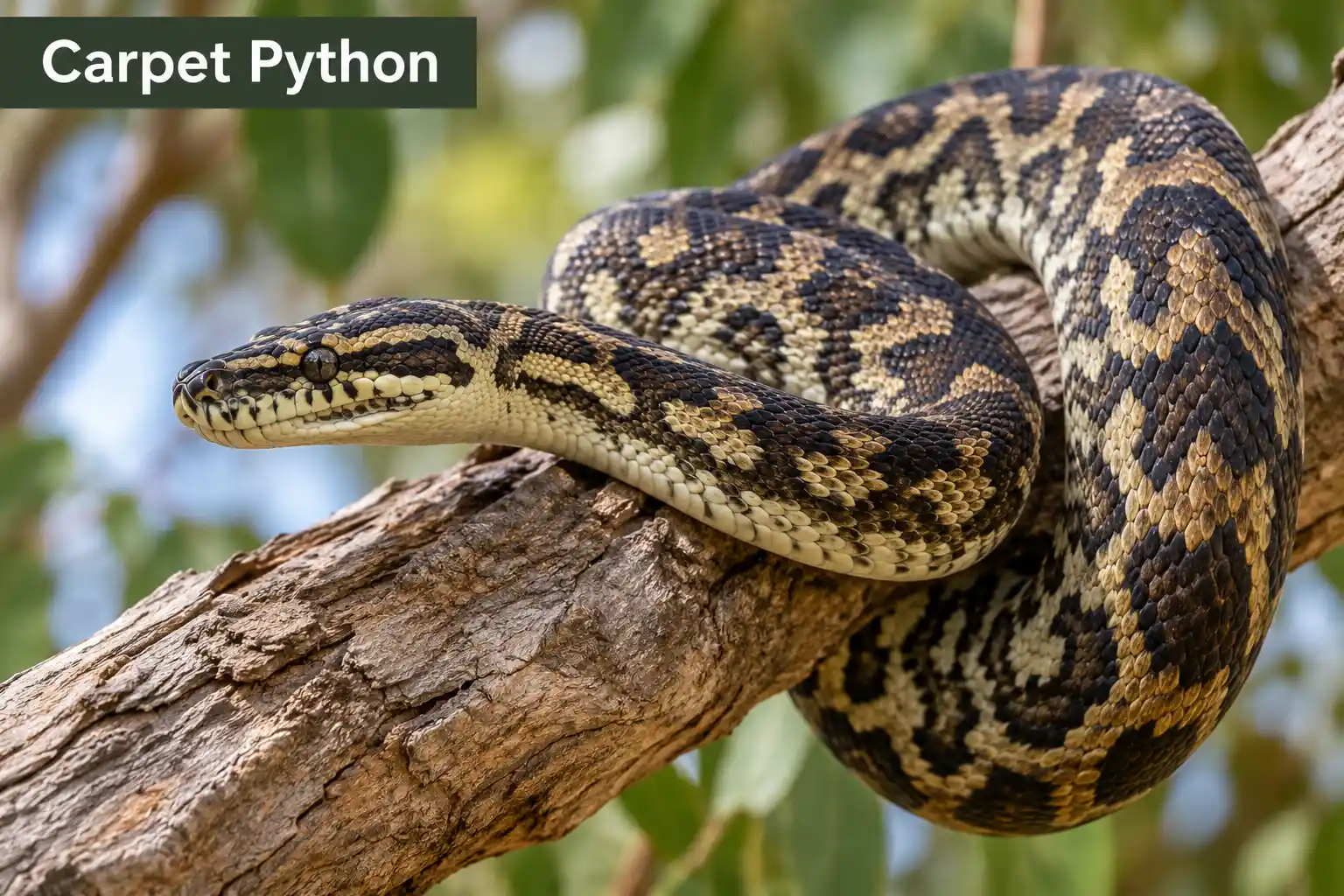
CARPET PYTHON
Scientific name: Morelia spilota
Venomous: No, non-venomous.
Are they dangerous?
Non-venomous, but their bites can cause injuries. Larger snakes are powerful and should not be handled without appropriate experience.
Carpet Python Facts
Where are they found?
Carpet pythons are commonly found in trees, gardens, bushland, roof spaces, sheds and around homes throughout the Mackay region. They shelter in tree hollows, logs, rocky crevices and other protected spaces.
When are they most active?
Carpet pythons are generally most active at night, although they may also move around or bask in the sun during the day.
What do they eat?
Their diet includes rats, mice, possums, birds and lizards. Larger carpet pythons may also take poultry, so securing chicken coops and bird aviaries is important. They help control local rodent populations.
What do they look like?
Carpet pythons are large, muscular snakes with distinctive patterned markings in shades of brown, cream, yellow and black. Adults commonly grow between 1.5 and 3 metres long, although some can grow larger.
How do they behave?
Carpet pythons are non-venomous and kill their prey by constriction. They generally avoid confrontation but may bite defensively if threatened, cornered or handled.
Are they dangerous?
Carpet pythons are non-venomous, but their bites can cause injuries. Larger snakes are powerful and should not be handled without appropriate experience.
What should I do if I see one?
Keep children and pets away, give the snake space and contact a licensed snake catcher if removal is required.
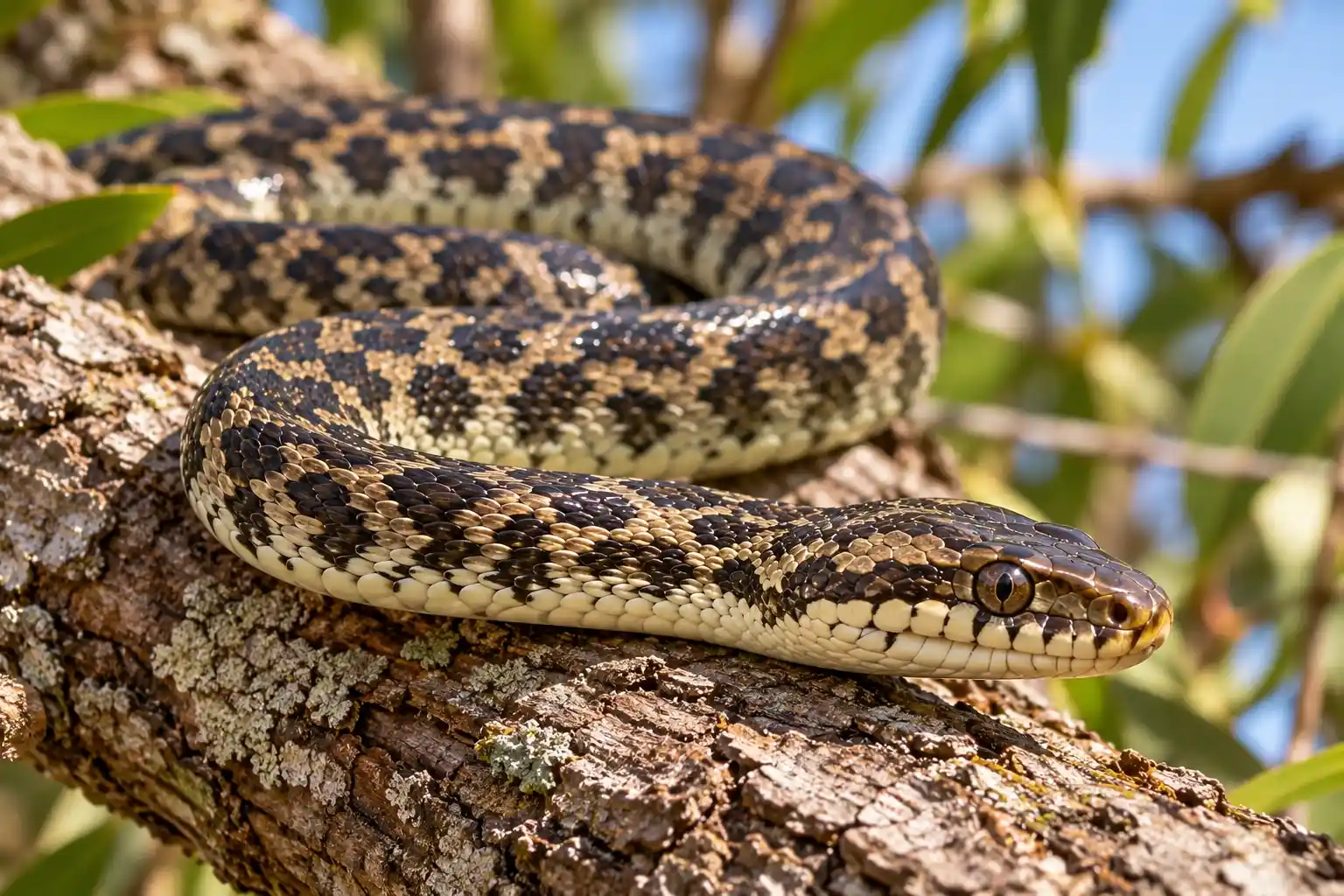
SPOTTED PYTHON
Scientific name: Antaresia maculosa
Venomous: No, non-venomous.
Are they dangerous?
Non-venomous and are not generally considered dangerous to people. However, they can bite if disturbed.
Spotted Python Facts
Where are they found?
Spotted pythons inhabit rocky areas, woodlands, forests and bushland. Around Mackay, they may also be found in gardens, sheds, roof spaces and other sheltered areas around homes.
When are they most active?
Spotted pythons are primarily nocturnal, becoming most active after dark when they emerge to hunt.
What do they eat?
They feed on small mammals, birds, lizards and occasionally bats. Like other pythons, they subdue their prey by constriction before swallowing it whole.
What do they look like?
Spotted pythons are relatively small, slender pythons with dark brown spots or blotches against a lighter brown or cream background. Adults commonly reach around 75 centimetres to 1 metre in length, although some grow larger.
How do they behave?
Spotted pythons are generally shy and prefer to avoid people. They may become defensive and bite if handled or threatened.
Are they dangerous?
Spotted pythons are non-venomous and are not generally considered dangerous to people. However, they can bite if disturbed.
What should I do if I see one?
Leave the snake alone, keep children and pets away, and contact a licensed snake catcher if it needs to be relocated.
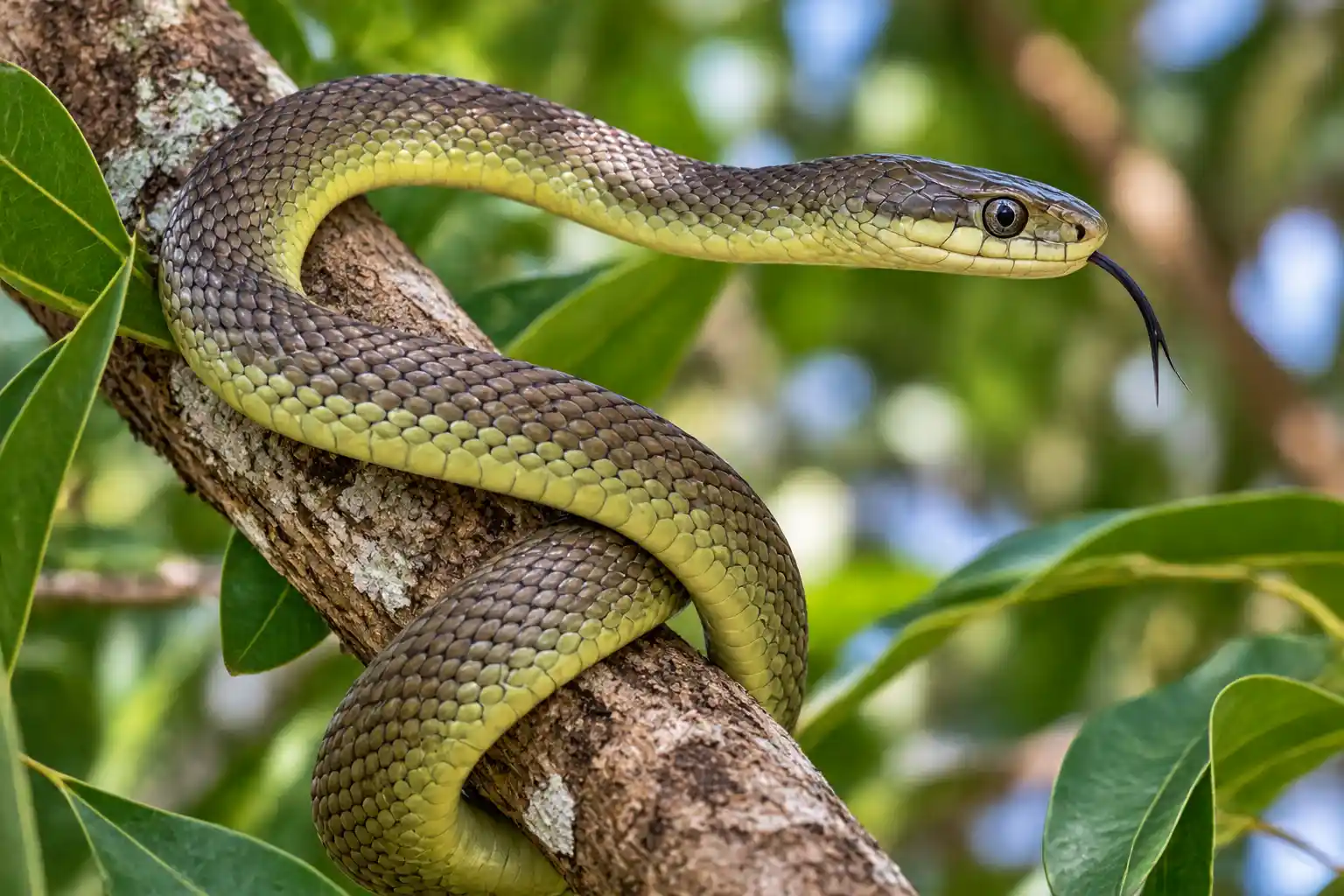
COMMON TREE SNAKE
Scientific name: Dendrelaphis punctulatus
Venomous: Non-venomous.
Are they dangerous?
Non-venomous and generally harmless to people. However, they may bite defensively if handled. Their appearance can vary, so never assume a snake is harmless based on its colour.
Common Tree Snake Facts
Where are they found?
Common tree snakes are frequently encountered throughout Mackay in gardens, trees, shrubs, bushland and near waterways. They are excellent climbers but also hunt on the ground.
When are they most active?
Common tree snakes are active during the day, particularly in warm, sunny conditions. They are often seen moving quickly through vegetation or climbing trees and fences.
What do they eat?
Their diet consists mainly of frogs and small reptiles, including lizards. They may also eat other small animals.
What do they look like?
Common tree snakes are slender snakes with large eyes and long, thin tails. They commonly grow between 1 and 1.5 metres long. Their colour varies considerably and may include green, olive, brown, grey, blue or black, often with a pale yellow or cream underside.
How do they behave?
Common tree snakes are fast-moving, agile climbers that generally retreat when disturbed. If threatened or cornered, they may inflate their bodies, release a strong-smelling substance or attempt to bite.
Are they dangerous?
Common tree snakes are non-venomous and generally harmless to people. However, they may bite defensively if handled. Their appearance can vary, so never assume a snake is harmless based on its colour.
What should I do if I see one?
Keep your distance, allow the snake an escape route and keep children and pets away. Contact a licensed snake catcher if the snake is inside your home or needs to be relocated.
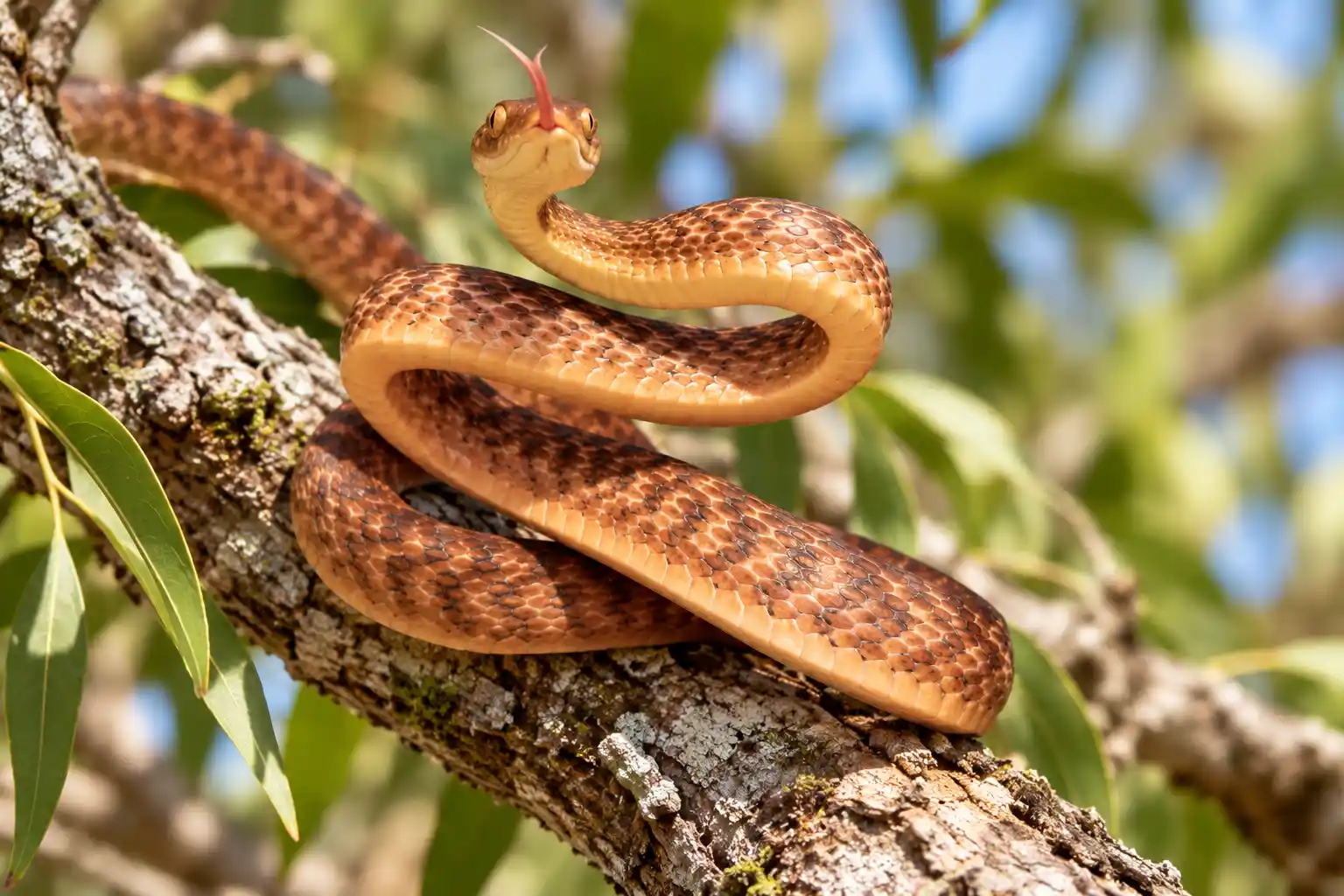
BROWN TREE SNAKE
Scientific name: Boiga irregularis
Venomous: Mildly venomous.
Are they dangerous?
Yes, mildly venomous with rear-positioned fangs. They may strike if threatened or cornered.
Brown Tree Snake Facts
Where are they found? Found in forests, gardens, trees, sheds and roof spaces.
When are they most active? Mostly at night, particularly during warmer weather.
What do they eat? Birds, eggs, geckos, frogs, small mammals and other lizards.
What do they look like? Slender body, usually brown with darker bands, large eyes with vertical pupils and a broad head. Can grow up to 2 metres long.
Are they dangerous? Yes, mildly venomous with rear-positioned fangs. They may strike if threatened or cornered.
What should I do if I see one? Stay calm, keep your distance, move children and pets away, and never attempt to handle or kill it. Contact a licensed snake catcher if removal is necessary.
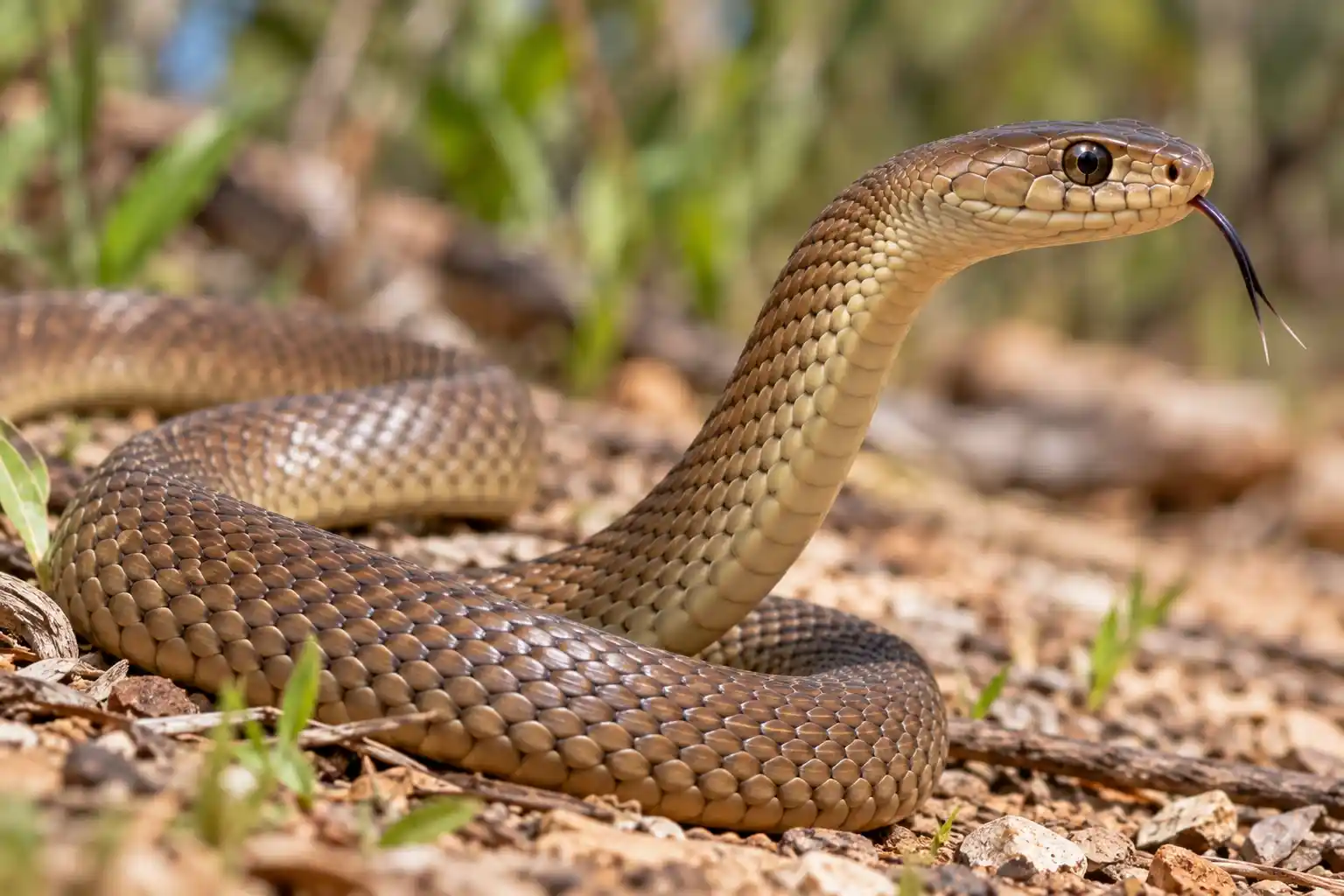
EASTERN BROWN SNAKE
Scientific name: Pseudonaja textilis
Venomous: Yes, highly venomous.
Are they dangerous?
Yes. Eastern browns are highly venomous and their bites can be life-threatening. They usually avoid people but may become defensive if threatened. Never approach or handle one. If bitten, call 000 immediately.
Eastern Brown Snake Facts
They are highly venomous and should only be handled by a licensed snake catcher.
Where are they found?
They favour open grassland, woodland, and agricultural areas. They may shelter beneath logs, rocks, building materials or in animal burrows, and visit properties where rodents provide a food source.
When are they most active?
Eastern browns are mainly active during the day. In very hot weather, they may hunt later in the afternoon or early evening.
What do they eat?
Their diet includes rats, mice, lizards, frogs, birds, and reptile eggs. They help control rodent populations.
What do they look like?
Adults average around 1.5 metres long. Their colour ranges from light tan to dark brown or almost black. Young snakes may have dark head markings and body bands. Colour alone cannot reliably identify them.
How do they behave?
Eastern browns usually try to avoid people, but can become defensive if startled, cornered or threatened. Never approach, catch, or attempt to kill one.
What should I do if I see one?
Back away, keep children and pets away, and contact a licensed snake catcher if removal is needed. Never approach a snake to identify it or take a photo.
Are juvenile eastern brown snakes dangerous?
Yes. Young eastern browns are venomous too.
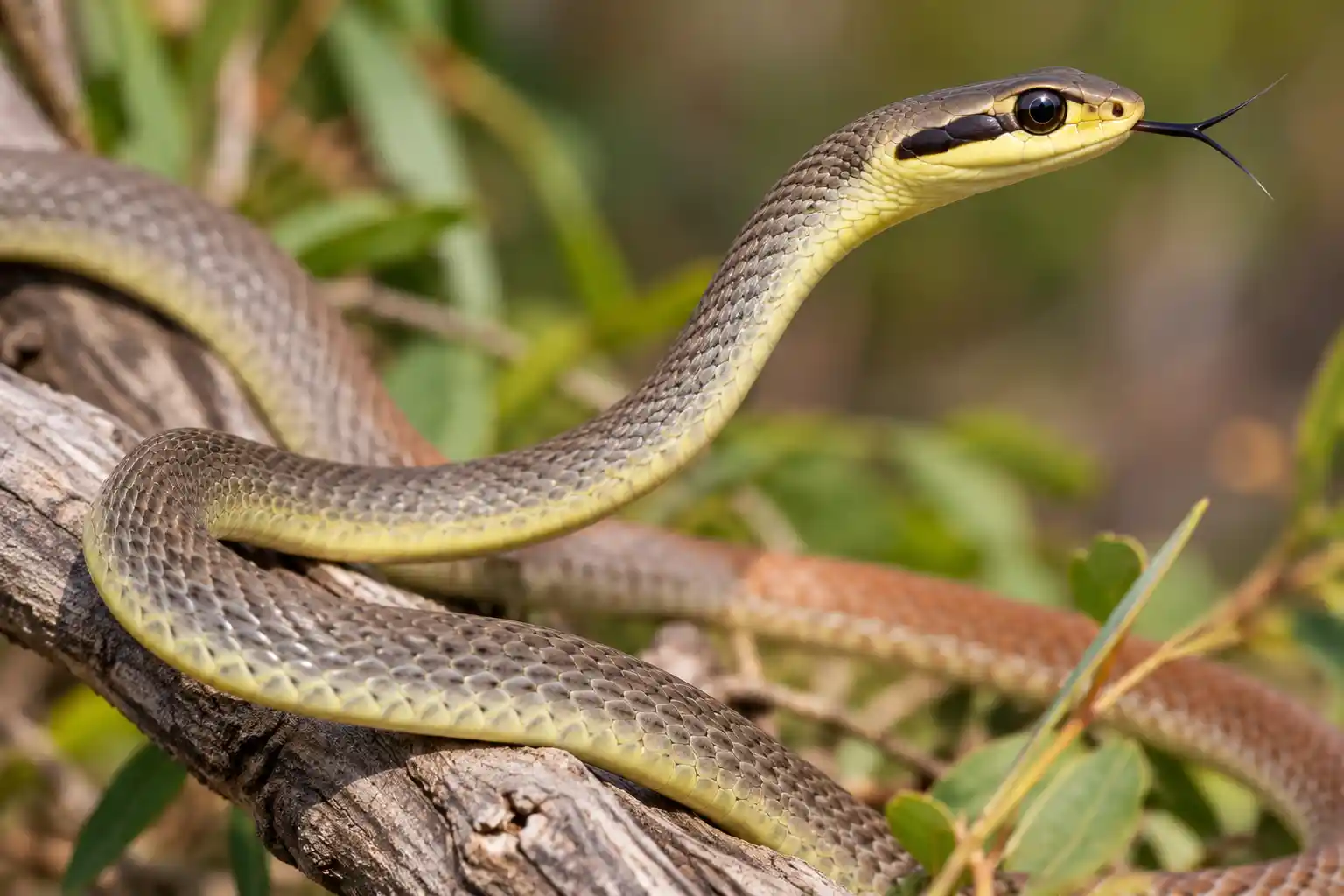
YELLOW FACED WHIP SNAKE
Scientific name: Demansia psammophis
Venomous: Yes, mildly venomous.
Are they dangerous?
They are mildly venomous, and bites can cause significant pain and swelling. They can be confused with eastern brown snakes, so identification should be left to a professional.
Yellow Faced Whip Snake Facts
Yellow-faced whip snakes are slender, fast-moving snakes and they are venomous.
Where are they found?
They occupy a wide range of habitats, including open woodland and grassland, generally avoiding rainforest and swamps.
When are they most active?
They are active during the day when they hunt for food. They are alert and usually retreat quickly when disturbed.
What do they eat?
Their diet consists mainly of small lizards, but they also eat frogs and lizard eggs.
What do they look like?
They are generally pale grey to brown, sometimes with reddish colouring on the head and tail. Distinctive facial markings include a dark, comma-shaped streak below the eye. They commonly reach around 80 centimetres long and can grow to approximately one metre.
Are they dangerous?
They are mildly venomous, and bites can cause significant pain and swelling. They can be confused with eastern brown snakes, so identification should be left to a professional.
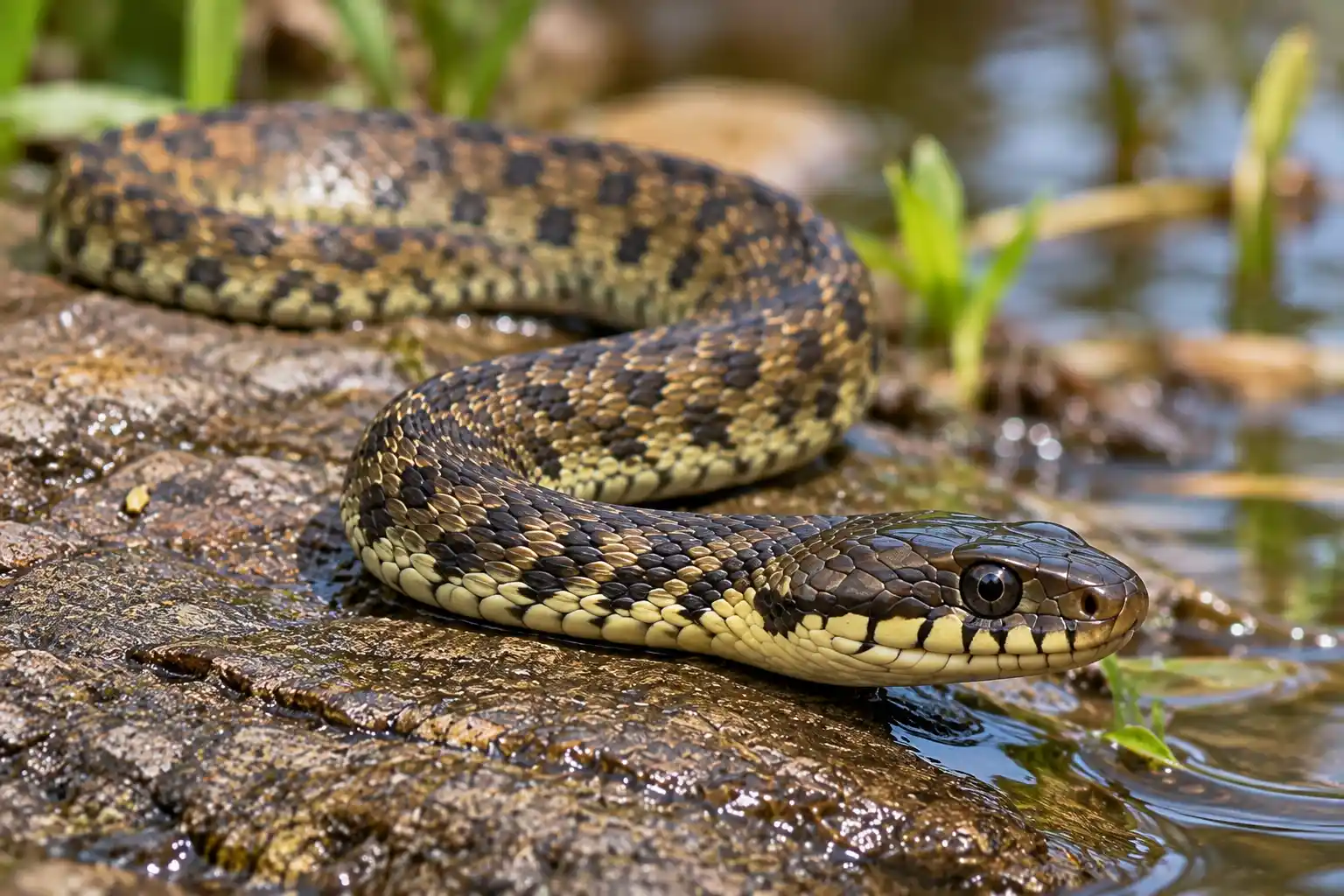
KEEL BACK (FRESHWATER SNAKE)
Scientific name: Tropidonophis mairii
Venomous: No, non-venomous.
Are they dangerous?
They are non-venomous and generally harmless to people, although they may bite if handled. They can resemble the highly venomous Rough-Scaled Snake, so identification should be left to a professional.
Keel Back Snake Facts
Keelbacks are non-venomous snakes also known as freshwater snakes. They are associated with freshwater habitats around Mackay.
Where are they found?
They favour damp areas near creeks, dams, swamps, and wetlands. They may also be encountered in gardens near freshwater, sheltering beneath vegetation, timber or in animal burrows.
When are they most active?
Keelbacks can be active during the day or at night, depending on the temperature.
What do they eat?
They mainly eat frogs, tadpoles, and small reptiles. They have some resistance to cane toad toxins and can eat small to medium-sized cane toads.
What do they look like?
They are usually grey, olive-brown, or dark in colour, with darker markings. Their scales have raised ridges, giving them a rough appearance. Most adults are around 50–75 centimetres long, although they can reach approximately one metre.
Are they dangerous?
Keelbacks are non-venomous but can bite if handled. They can look similar to the highly venomous rough-scaled snake, so identification should be left to a professional.
Found a Snake? Don't take chances.
Whether you’ve spotted a snake in your backyard, home, shed or workplace, it’s important to keep your distance and avoid attempting to remove it yourself.
Contact Mackay Snake Catchers for professional snake removal and relocation throughout Mackay and surrounding areas.